Investor Guide

Generous Incentives for Investment in Fiji

Fiji's special access to lucrative markets in Australia, New Zealand, the US and the EU and in a serious bid to attract investment, the country launched further concessions in its incentive package of 2001.

A Package based on 8 Principles

  • Low tax rates
  • Income taxed only once
  • Low duty rate on production inputs, construction and capital materials
  • Accelerated depreciation allowance
  • Investment allowances
  • Loss carry forward
  • Duty free input for exports
  • Export Income Tax deductible

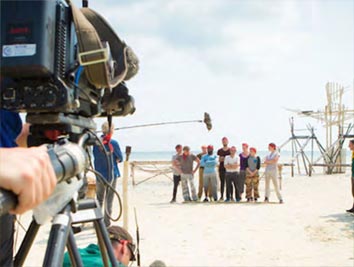
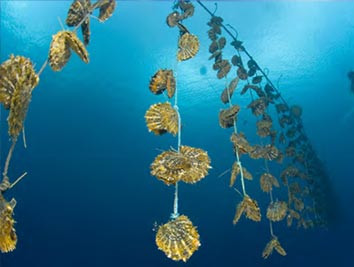
In addition, the package further offered specific industry concessions. In tourism for instance, projects for approved hotel building or expansion may be entitled under the Hotel Aid Act to receive an investment allowance of 55% of the cost. For tourism vessels, they get an investment allowance of 55% of the minimum cost of $100,000 FJD. Concessions are also offered for the development of upmarket hotels under what the Fiji Government calls the Short Life Investment Package (SLIP). Special concessions are also offered for mining, fishing, bus body-building and film making and audio visual.

Added Incentives:

  • Double taxation agreement: Fiji has negotiated with New Zealand, Australia, Japan and the United Kingdom, which means exemptions or tax concessions granted in Fiji are not negated by an imposition of tax in the country of residence of the investor.
  • Freedom to manage your business including the employment if necessary of foreign managerial and technical personnel
  • No taxation for non-resident on profit on sale of investment land.

As the one stop shop for investors, the Fiji Trades and Investment Bureau (FTIB) also facilitates assistance schemes that are offered to the private sector in Fiji. These include export promotion incentive and export finance facilities. The Bureau also liases with the Fiji/New Zealand Export Enhancement Fund, the Fiji/New Zealand Small Business Training Fund, Pacific Island Investment & Development Scheme, Centre for Development of Enterprise, South Pacific Project Facility, Forum Secretariat Assistance Scheme and the ACP-EU Assistance-Scheme.

Governor of the Governor of Reserve Bank of Fiji, Mr. Savenaca Narube believes that the setting up of an Export Credit Guarantee Scheme is also a step forward as the government recognises the importance of the export industry in driving economic growth. "The establishment of the Scheme comes at an opportune time, particularly with some exporters facing financing difficulties. These measures should go a long way to deepen and create a more efficient financial sector." To reward and recognise enterprising exporters, the FTIB organises its annual Exporter of the Year award.

Held towards the end of the year, the award is supported and sponsored by the private sector. Fiji Fish Marketing Group Ltd. is one of the classic winners.

Coming as a major reassurance for foreign and local investors alike was the decision of international donor agencies to do business with the Fiji Government. Bulk of the aid is going into infrastructure development. The European Union for instance is funding about $55 million FJD (@ $27.5m USD) worth of projects in 2003/2004, which includes the relocation of the capital city's Lami rubbish dump, the construction of a new Fiji School of Medicine campus and the new Rewa Bridge. Japanese aid is funding the new sewerage outfall at the capital's sewage treatment plant. The Fiji Government is also investing heavily in its water supply distribution system.


Investment in Education Results in Highly Trained Workforce

A legacy of past governments in Fiji has been their emphasis in education. The country now boasts a well-educated population with over 90 percent literacy rate. With free education offered up to year 10 of schooling, children are encouraged to pursue excellence. Tertiary education is being encouraged through government scholarship schemes and student loan facilities. Fiji is among island nations that got together in the late 1960s to form the University of the South Pacific. It now hosts the university's largest campus at Laucala and has become the largest contributor of the university budget. Other island nations have also made use of Fiji's School of Medicine, its Nursing School, Institute of Technology, College of Agriculture and numerous computer and IT based institutions.

Says Prime Minister Laisenia Qarase: "Our educational level compares well with the level of education in countries like Australia or New Zealand. Our population speaks English very fluently and it is a literate population. We believe that education is the key for development so we will continue allocating resources to this sector as a matter of priority."

Fiji likes to pride itself as an investor's paradise and over the years, have introduced packages it hope will attract investors and their money. It wants to roll out the red carpet to any investor and it was with this in mind that it established the Fiji Trade and Investment Bureau (FTIB). The Bureau aspires to be the one-stop shop for investors by spearheading promotional activities, providing advisory and information services and export marketing information and acting as a liaison between government and private sector. Its work is provided for in the Foreign Investment Act that which offers the regulatory framework under which investors operate. The Act dictates certain sectors of the economy that are reserved for Fiji citizens and national enterprises only and the FTIB is there to guide investors along. For further information please enter the following website for FTIB:
www.ftib.org.fj


Site map|